Key Takeaways
- Bitcoin halving reduces mining rewards by 50%, tightening supply and often influencing price cycles.
- The 2025 halving could trigger renewed institutional interest amid a maturing crypto market.
- Long-term holders see halving events as signals for Bitcoin’s scarcity and value proposition.
What Is Bitcoin Halving? Understanding the 2025 Event and Its Impact on Crypto Markets
As Bitcoin approaches its next halving in April 2025, anticipation is building across the crypto industry. Every four years, the event reshapes the economics of the world’s largest cryptocurrency, influencing everything from mining incentives to market sentiment. To newcomers, the term “Bitcoin halving” might sound technical—but it’s one of the most crucial mechanisms that defines how Bitcoin sustains its value and scarcity.
This article breaks down what Bitcoin halving is, why it happens, and what the 2025 event could mean for investors, miners, and the broader Web3 ecosystem.
Understanding Bitcoin Halving
Bitcoin halving is a pre-programmed event built into the cryptocurrency’s code by its creator, Satoshi Nakamoto. It occurs roughly every 210,000 blocks, or about every four years. During each halving, the reward that miners receive for adding a new block to the blockchain is cut in half.
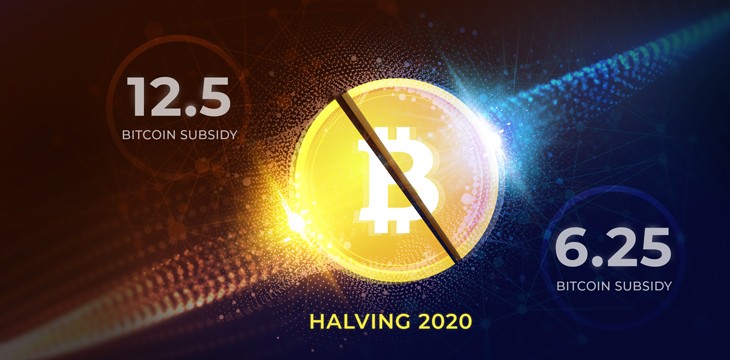
When Bitcoin launched in 2009, miners earned 50 BTC per block. After several halvings—in 2012, 2016, and 2020—the reward now stands at 6.25 BTC. The upcoming 2025 halving will reduce it further to 3.125 BTC per block.
This mechanism controls Bitcoin’s inflation rate by slowing the release of new coins into circulation. Because there will only ever be 21 million BTC, halving events reinforce Bitcoin’s deflationary nature, making it scarcer over time.
Why Bitcoin Halving Matters
The halving process is more than just a technical milestone—it’s an economic catalyst that influences how markets behave. Here’s why it’s so significant:
- Reduced Supply Pressure: With fewer new Bitcoins entering the market daily, the selling pressure from miners typically declines. In past cycles, this scarcity effect has preceded major price rallies.
- Investor Psychology: Halving events often draw renewed attention from retail and institutional investors, who see them as predictable points of potential price appreciation.
- Mining Economics: Miners must adapt to reduced rewards by becoming more efficient or relying on higher Bitcoin prices to stay profitable. This can drive innovation in mining technology and energy optimization.
Historically, halvings have acted as inflection points for Bitcoin’s price trajectory. Following the 2020 halving, Bitcoin surged from around $9,000 to over $60,000 within a year. While past performance doesn’t guarantee future results, many in the crypto community view halvings as the heartbeat of Bitcoin’s market cycles.
The 2025 Bitcoin Halving: What to Expect
The upcoming 2025 Bitcoin halving arrives in a vastly different environment compared to previous cycles. The crypto market has matured significantly, with institutional adoption, spot Bitcoin ETFs, and regulatory frameworks taking shape worldwide.
1. Market Dynamics Are Evolving
Unlike the early days, Bitcoin is now deeply integrated into the global financial system. Major firms such as BlackRock, Fidelity, and MicroStrategy hold or manage Bitcoin positions, while nations like El Salvador continue to experiment with Bitcoin-based economies.
This institutional presence could moderate volatility or accelerate price discovery, depending on how large investors react to the supply cut.
2. Miner Consolidation and Efficiency
Mining has become a capital-intensive industry, and the halving will pressure less efficient miners. Larger, well-capitalized operations may consolidate market share by leveraging renewable energy or advanced ASIC technology.
Regions with cheap energy—such as parts of Texas, Kazakhstan, and Canada—could see intensified mining activity. Meanwhile, smaller miners may join mining pools or exit the market altogether.
3. Potential Price Reactions
While predicting Bitcoin’s price is notoriously difficult, on-chain data and past cycles offer some clues. Historically, Bitcoin tends to accumulate quietly before a halving, followed by a strong upward trend in the subsequent 12–18 months.
However, the 2025 cycle will unfold under new macroeconomic conditions: interest rate shifts, geopolitical tensions, and global liquidity cycles will all play a role in shaping demand.
Long-Term Implications for Web3 and Digital Assets
Beyond Bitcoin itself, the halving ripples across the broader Web3 ecosystem. Many blockchain games, DeFi platforms, and NFT projects rely on Bitcoin’s price stability and market sentiment to attract users and capital.
If the 2025 halving triggers a renewed bull market, it could reignite venture capital interest in blockchain innovation, gaming tokens, and cross-chain infrastructure. Developers and investors alike view Bitcoin’s scarcity model as the cornerstone of trustless digital finance.
Moreover, with Layer 2 scaling solutions like Lightning Network and Bitcoin ordinals (NFTs on Bitcoin) gaining traction, the ecosystem around Bitcoin is diversifying beyond simple payments. The halving may serve as a symbolic moment that reminds the world why Bitcoin remains the foundation of decentralized value.
Risks and Misconceptions
Despite the optimism, it’s essential to recognize that halving doesn’t guarantee instant price growth. Market cycles depend on demand as much as supply. If global liquidity tightens or investor sentiment weakens, Bitcoin could experience prolonged consolidation instead of a sharp rally.
Another misconception is that halving events are purely bullish. In reality, they also test the resilience of the network. Reduced miner revenue can lead to temporary drops in hash rate (computing power), though historically, Bitcoin’s security has quickly rebounded as the network self-adjusts.
Conclusion: A Milestone in Bitcoin’s Deflationary Journey
The 2025 Bitcoin halving is more than a calendar event—it’s a defining moment in the cryptocurrency’s economic design. By halving rewards and slowing issuance, Bitcoin reaffirms its commitment to scarcity, separating it from inflationary fiat systems.
Whether this cycle mirrors past bull markets or charts a new path in a more institutionalized landscape, one thing remains constant: Bitcoin halving symbolizes the intersection of technology, economics, and belief in digital scarcity.
As 2025 approaches, both seasoned traders and curious newcomers will be watching closely—because in Bitcoin’s world, every halving tells the story of digital gold’s evolution.