Key Takeaways
- Two ultra-rare 1,000 BTC Casascius coins have been activated after more than 13 years, unlocking over $179 million.
- These physical Bitcoin collectibles are scarce historical artifacts minted between 2011–2013 by Mike Caldwell.
- Activation of a Casascius coin does not necessarily indicate an imminent selloff; holders often move funds for security reasons.
Two long-dormant Casascius coins, each backed by 1,000 Bitcoin, have come alive after more than 13 years, setting off renewed fascination about one of the most coveted physical Bitcoin collectibles ever created. On Friday, onchain data confirmed that both coins had been activated, collectively unlocking more than $179 million worth of BTC.
With Bitcoin trading for just a few dollars at the time these coins were minted, the activation underscores one of the most extraordinary long-term returns in crypto history and shines a spotlight once again on the legacy of Casascius coins and their role in early Bitcoin culture.
A Rare Kind of Bitcoin Awakens
The first of the recently activated coins dates back to October 2012, when Bitcoin traded at $11.69. The second goes even further into Bitcoin’s early days, minted in December 2011 when BTC was valued at only $3.88. At today’s prices, that earlier coin represents a theoretical return of roughly 2.3 million percent—an almost surreal reminder of how dramatically the cryptocurrency landscape has evolved since Bitcoin’s infancy.
Only a small number of Casascius pieces of this magnitude were ever produced. Records suggest that just 16 bars and 6 coins containing 1,000 BTC were minted, giving them near-mythical status among collectors and early adopters.
Their reactivation is rare not only because of their scarcity, but because many owners choose long-term holding or keep their funds offline in perpetuity. When one resurfaces, it captures the attention of analysts, traders, and historians alike.
The Origins of Casascius Coins
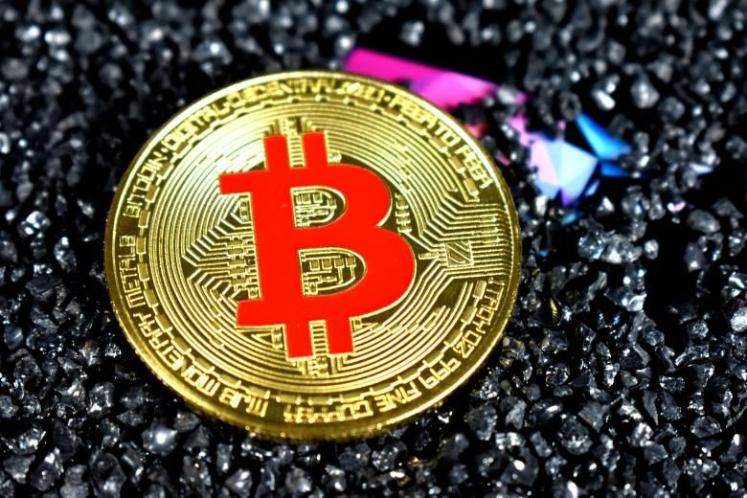
Casascius coins were the creation of Utah-based entrepreneur Mike Caldwell, who operated the minting project between 2011 and 2013. His goal was to transform digital Bitcoin into tangible, beautifully crafted metal coins and bars that physically embodied BTC’s value.
These coins quickly became iconic. Each contains a private key printed on a small slip of paper embedded beneath a holographic sticker. The hologram serves as a tamper-evident seal. Once peeled, anyone can verify that the Bitcoin has been redeemed, which renders the coin’s digital value spent—even though the object itself often retains collectible value.
Collectors view Casascius pieces as historical artifacts from a phase of Bitcoin that predates institutional custody, regulatory clarity, and mainstream adoption. For many, owning one is equivalent to holding a time capsule from the earliest era of crypto experimentation.
Caldwell stopped producing Casascius coins in 2013 after receiving a notice from the Financial Crimes Enforcement Network (FinCEN), which warned that minting physical Bitcoin-denominated coins could be interpreted as operating an unlicensed money transmission business. Although controversial at the time, the decision effectively froze Casascius coins in history, ensuring they would become permanently scarce.
How Casascius Coins Work
Each coin or bar contains a fixed amount of Bitcoin loaded onto a private key. The denominations ranged from 1 BTC to 1,000 BTC. The owner gains access to the Bitcoin only by removing the hologram and obtaining the private key underneath.
This activation process is what blockchain watchers saw occur on Friday. Once a private key is redeemed, the onchain movement confirms that the Bitcoin has been transferred from the Casascius address to a new wallet controlled by the redeemer.
Importantly, redeeming does not mean the Bitcoin will immediately hit the open market. It simply means the holder moved their BTC to another wallet—often for security, convenience, or estate planning reasons.
Does This Mean a Selloff Is Coming?
A large, sudden shift of 2,000 Bitcoin naturally invites speculation about potential sales, but historical behavior suggests that activation does not necessarily translate into liquidation.
In July, Cointelegraph interviewed a holder known as “John Galt,” who redeemed a 100-BTC Casascius coin after years of offline storage. He explained that moving the coins was motivated by security rather than a desire to cash out.
“Having 100 BTC is life-changing for anyone,” he said. “But I’ve had it for so long that this was more about staying safe than suddenly getting rich.”
That same logic often applies to owners of large Casascius denominations. Many acquired their BTC long before today’s prices and may simply want modern storage solutions such as hardware wallets.
Additionally, many early Bitcoiners identify as long-term holders—individuals who value preservation over profit-taking. For them, activating a Casascius coin is a step in asset management, not a prelude to selling.
The Legacy and Future of Casascius Collectibles
As Bitcoin matures into a global financial asset, Casascius coins serve as relics of a different era—part artwork, part cold-storage solution, part collector’s item. Their scarcity is permanent, their symbolism unmatched, and their emergence onchain always noteworthy.
The activation of two 1,000-BTC coins is not merely a movement of funds; it is a reminder of how far Bitcoin has come since 2011 and 2012. The technology, culture, price, and regulatory landscape have transformed dramatically, yet the early artifacts still carry enormous historical and financial weight.
Whether the newly activated coins remain in long-term storage or eventually enter the market, their movement highlights the continued relevance of early Bitcoin collectibles in a modern ecosystem dominated by institutional infrastructure.
Conclusion
The activation of two 1,000-BTC Casascius coins—worth more than $179 million—marks one of the most significant awakenings of early Bitcoin in recent memory. Minted when BTC was priced at just a few dollars, these artifacts represent vast returns and a direct connection to the cryptocurrency’s origin years.
Their appearance onchain does not necessarily signal a market impact, but it does reinforce the mystique surrounding Casascius coins and their owners. As Bitcoin enters the 2025–2026 period with renewed momentum, the reawakening of such rare historical pieces reminds the industry of its roots—and of the extraordinary paths early adopters traveled to reach this point.